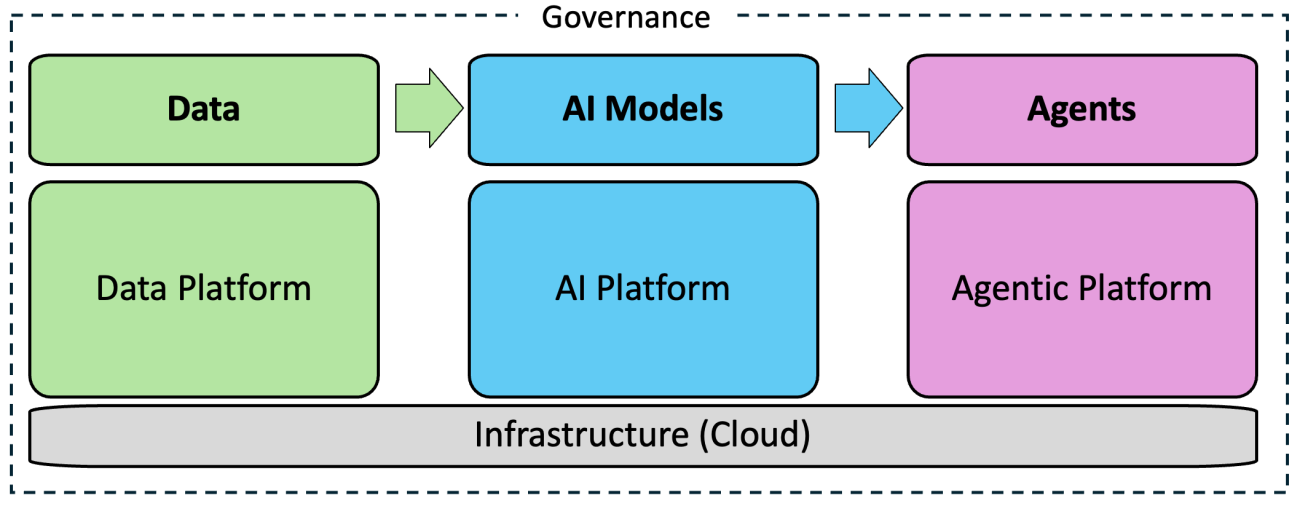
A surge of energy, investment, and optimism is driving organizations to adopt artificial intelligence (AI). However, these efforts carry risks, including wasted resources from redundant investments and added operational complexity and costs. Like a roller coaster, AI initiatives require carefully designed safeguards to move fast but avoid calamity. As these initiatives proliferate throughout the organization, implementing unique controls for every AI application becomes unsustainable. Leaders should instead establish consistent organizational controls where they can have the greatest impact. Where can controls enable speed without sacrificing safety?
Drawing on interviews,[foot]Between May 2024 and August 2026, we interviewed 48 leaders from 28 organizations in APAC, Europe, and the US about barriers to AI value creation. We categorized responses about how to manage AI effectively into four domains: architecture compliance, innovation management, workforce enablement, and supplier governance. From those, we extracted essential controls (key policies or processes) respondents identified for effective oversight and intervention. [/foot] this briefing[foot]The authors thank Stephanie Woerner and Cheryl Miller of MIT CISR for their assistance in shaping and refining the briefing text.[/foot] identifies four domains where guardrails matter most for managing AI and effective controls, illustrated by a case vignette about Tunic Pay.[foot]The Tunic Pay vignette draws on July and August 2026 interviews with the UK fintech’s chief executive officer and chief operating officer and public sources. [/foot]